Combined building and pest versus separate reports
AS 4349.1 and AS 4349.3 are different jobs. In Newcastle they are often sold as one afternoon — what you gain in convenience, what you lose in attention, and when a specialist timber pest inspection is worth commissioning on its own.
By Tom Reilly, Timber pest correspondent · 28 March 2024 · Updated 12 October 2025 · 10 min read
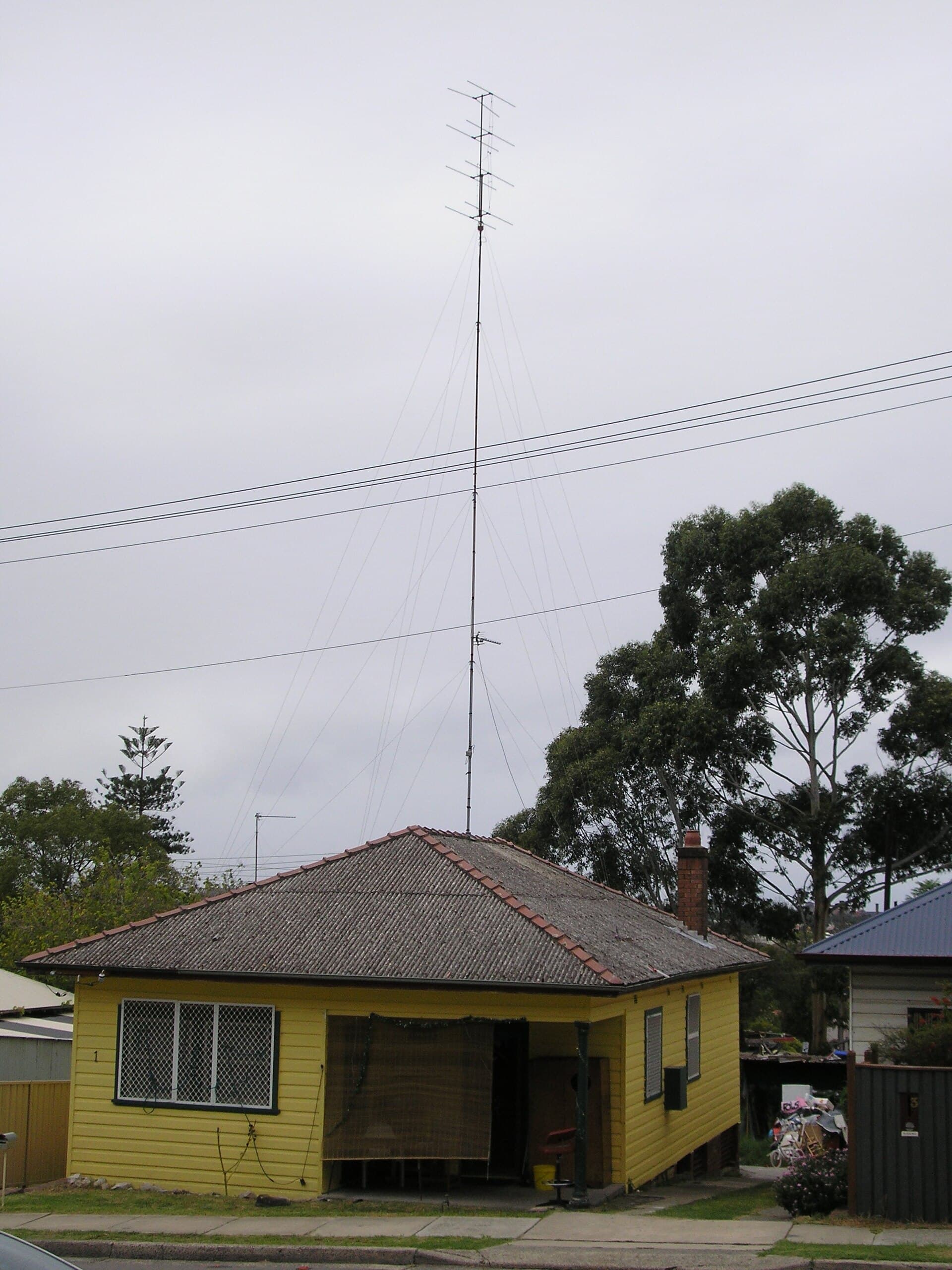
Photo: One Salient Oversight. House in Waratah. Public domain. Source on Wikimedia Commons. Licence. Full credits on the image credits page.

In Newcastle a “building and pest” is the phrase that comes out of a buyer’s mouth before the address does. It sounds efficient. It is often sold that way: one person, one visit, one PDF, a price that looks like a bargain next to two invoices. The house in Waratah does not care. It is still two standards, two kinds of looking, and two ways of being wrong.
This essay is about the join between those jobs, not a ranking of firms. The building walk is set out in what a pre-purchase building inspection covers. The insects have their own natural history in termite risk in the Hunter and their own method in what a timber pest inspection looks at. Here we are only arguing about whether you should let one afternoon pretend to be both.
Two standards, not a combo meal
Most serious pre-purchase building inspections in this state are written to AS 4349.1 — Inspection of buildings, Part 1: Pre-purchase inspections — Residential buildings. Most serious timber pest inspections are written to AS 4349.3. They share a family resemblance. They are not the same document.
AS 4349.1 is an opinion on the condition of the building in reasonably accessible areas: structure, water, safety, the envelope. It may note conditions that would interest a pest inspector — a wet subfloor, timber in contact with soil, a blocked vent — because those are also building facts. It is not a timber pest inspection. The sample report that says “no visible termite activity” in a building-only job is doing you a confusion.
AS 4349.3 is an inspection for timber pests and the conditions that favour them. Termites, borers, fungal decay where it bears on timber pest work. Sounding, probing, crawling, looking at trees and stumps and the soil junction. The inspector is paid to hunt, not to admire the kitchen tap.
A combined product that is honest will still be two scopes. You should be able to tell, in the PDF, which paragraphs are building defects and which are pest findings. If the language collapses into a single “the property was found to be in fair condition”, you have bought a brochure.
The reports and standards hub is the longer paper trail. The limitations essay applies to both inspections, and is more important when one person is trying to finish both before the next booking in Hamilton.
One inspector versus two
A person can hold both competencies. Plenty of inspectors in this city do building and timber pest work, and do both carefully. The question is not whether combination is illegal. It is whether combination, on this house, on this morning, is enough looking.
One inspector means one set of eyes, one insurance policy, one timetable, one person who has already been in the roof when they go under the floor. There is a real advantage in that. A wet bathroom that looks like a building defect is also a pest fact. A bounced floor can be a structural story and a termite story at the same time. A single mind can hold both.
Two inspectors means two timetables and two chances to get into the roof void before the tenant comes home. It also means a pest specialist who is not mentally halfway through a brick-crack paragraph, and a building inspector who is not rushing the subfloor because the pest section is “the bit at the end”. On a simple brick veneer with good access, the gain may be small. On a weatherboard cottage in an inner suburb, with a low crawl space and a roof full of insulation, the gain can be the difference between a report and a guess.
What to ask before you book
Ask, either way:
- which standard each part is written to
- what timber pest qualifications and licences the person actually holds
- how long they expect to be on site, not how long the drive from Charlestown takes
- whether the pest inspection includes the site, trees and outbuildings or only the dwelling
- what happens if access fails — a locked subfloor hatch is not a footnote you discover after exchange
If the answer to “how long” is a number that would barely cover a careful building inspection on its own, you already know what you are buying.
What you lose by combining
You do not automatically lose competence. You often lose time, and time is how timber pest work is done.
A combined booking is priced to sit in a morning with another job after it. The inspector who would spend forty minutes sounding a roof void on a specialist pest inspection will, on a combined job, spend those forty minutes on the building envelope and then do a shorter version of the hunt. Sometimes the shorter version is still honest. Sometimes the roof hatch is awkward, the subfloor is wet, the garden is a jungle, and the “combined” product quietly drops the parts that do not fit the diary.
You can also lose independence of attention. A building inspector thinking like a building inspector will classify a cracked pier and move on. A timber pest inspector looking at the same pier is interested in the mud on the side of it, the soil grade against it, the timber packing under it, the ant cap that was bridged in 1963. If one person is writing both reports in the car, one of those ways of seeing will get the leftover minutes.
You lose a second appointment’s worth of access politics. Tenants and vendors will often tolerate one invasion. Two visits can mean the subfloor hatch is actually cleared, the dog is actually locked up, the stacked boxes in the garage have been moved. That is not a small courtesy. Incomplete access is how both standards fail. It is also how buyers end up in the after the inspection mess of deciding whether to walk away on the basis of a report that never saw the rooms.
You lose, sometimes, a specialist’s tools and habits. A dedicated timber pest inspection is more likely to include the unglamorous extras: more soundings, more time on trees, a moisture profile that is about pest conditions rather than a single damp bathroom. Thermal cameras and meters are not magic in either job; they are even less magic when they are a performance in a combined package. The building essay already warns you about that. Believe it twice.
None of this means combined reports are a scam. It means the discount is coming from somewhere. Usually it is coming from the pest half, because the pest half is the part buyers cannot see being skipped.
When a specialist pest inspection is worth it
Pay for a separate timber pest inspection, or at least for a pest visit that is not squeezed, when the facts of the house demand more looking than a combined quote has sold.
Timber-rich stock. Weatherboard, timber floors, original subfloors, decorated interiors, old roof framing. Inner Newcastle and the older lake towns are full of this; the types are catalogued in Hunter housing stock. A brick skin does not make a timber-framed house a low-pest job.
A history. Old workings, a previous treatment, a vendor who says “we had termites years ago but it was sorted”. Historic damage is a map. It deserves someone whose whole morning is about following it.
Site conditions. Gardens against walls, poorly ventilated subfloors, trees with carton nests, firewood, decks on dirt, a house on the lake that smells like a riverbank after rain. Subfloor ventilation and moisture is the companion reading. So is coastal corrosion, not because salt eats termites — it does not — but because the same strip from Stockton to Redhead stays wet enough to matter.
Awkward access. Low subfloors, no obvious manhole, insulation burying the ceiling joists, a locked granny flat, a tenanted house. The specialist is the person you are paying to fight for access and to write, in language you can find later, what remained unseen.
The size of the money. A combined saving of a few hundred dollars is a poor hedge against a Coptotermes gallery in a bearer. That is not a statistic. It is arithmetic.
After a find. If a combined report already shows live termites or serious workings, do not use the same rushed visit as your only expert view of treatment options. Treating versus monitoring is a different decision from “should we combine the first look”.
If the house is a straightforward, well-ventilated, recently inspected brick veneer and the inspector is genuinely dual-qualified, a combined job can be a reasonable buy. The pre-purchase process still applies: be there, ask questions, read limitations first. Convenience is not the enemy. Pretending the insects were included for free is.
How to read the package when it arrives
Open the PDF as two documents.
Read the pest limitations, then the pest findings, then the conducive conditions, then the building major defects, then the rest. If live timber pests are recorded, the building comments about “fair condition” are not the story. If the pest section is two paragraphs and the building section is twelve pages, ask whether the hunt was a hunt.
Look for sentences that mix the standards: a “minor defect” that is actually an active gallery, a “monitor” that is actually a treatment decision, a building safety item that hides a pest access problem. Ambiguity is cheaper to write than two clear scopes.
Then decide what kind of buyer you are. The pest and termite hub will not book the second inspector for you. It will make it harder to believe you already had one when you only paid for a glance. Living with a fair report is for the houses where both jobs were done properly and the news was ordinary. Ordinary, in the Hunter, still includes maintenance.
A note on this journal
We do not sell inspections, combined or otherwise. We do not take a cut for steering you toward a dual-qualified person or away from one. The point of this page is to stop “building and pest” functioning as a spell. It is a sentence. Unpack it before exchange.
Questions readers ask
- Is a combined building and pest inspection two reports or one?
- It should be two scopes, even if they arrive as one PDF. AS 4349.1 is the building inspection. AS 4349.3 is the timber pest inspection. If the document cannot tell you which standard a sentence belongs to, that is a problem.
- Can one licensed inspector do both?
- Yes, if they are actually qualified and equipped for both. A building inspector who glances at a fence post is not doing a pest inspection. Ask what licences they hold and how they split the time on site.
- When should I pay for a separate specialist pest inspection?
- When the house is timber-rich, access is awkward, there is a history of termites, or the purchase is large enough that a rushed combined job is a false economy. High-risk stock in the Hunter often is.
Keep reading
Subfloor ventilation and moisture in coastal Newcastle
From Stockton to Redhead the crawl space stays wet — blocked vents, plastic on soil, bathrooms leaking into the dark, and why lake suburbs and rising-damp language keep getting in the way of a clear diagnosis.
Tom Reilly · 5 September 2024 · 10 min read · Photo: DaHuzyBru, CC BY-SA 4.0
Treating versus monitoring after a termite find
Live termites in a Newcastle purchase are a decision, not a weekend DIY job — chemical barriers and baiting in general terms, structural repairs, vendor obligations, and the case for walking away.
Tom Reilly · 27 June 2024 · 11 min read · Photo: Michael Gardner, Public domain
What a timber pest inspection looks at
A practical account of AS 4349.3 in Newcastle and the Hunter — soundings, mudding, frass, roof voids, subfloors and the landscaping that feeds a house, plus the cavities no honest inspector will pretend to have seen.
Tom Reilly · 2 May 2024 · 11 min read · Photo: Sam Wilson, CC BY-SA 2.0