What a timber pest inspection looks at
A practical account of AS 4349.3 in Newcastle and the Hunter — soundings, mudding, frass, roof voids, subfloors and the landscaping that feeds a house, plus the cavities no honest inspector will pretend to have seen.
By Tom Reilly, Timber pest correspondent · 2 May 2024 · Updated 11 February 2026 · 11 min read
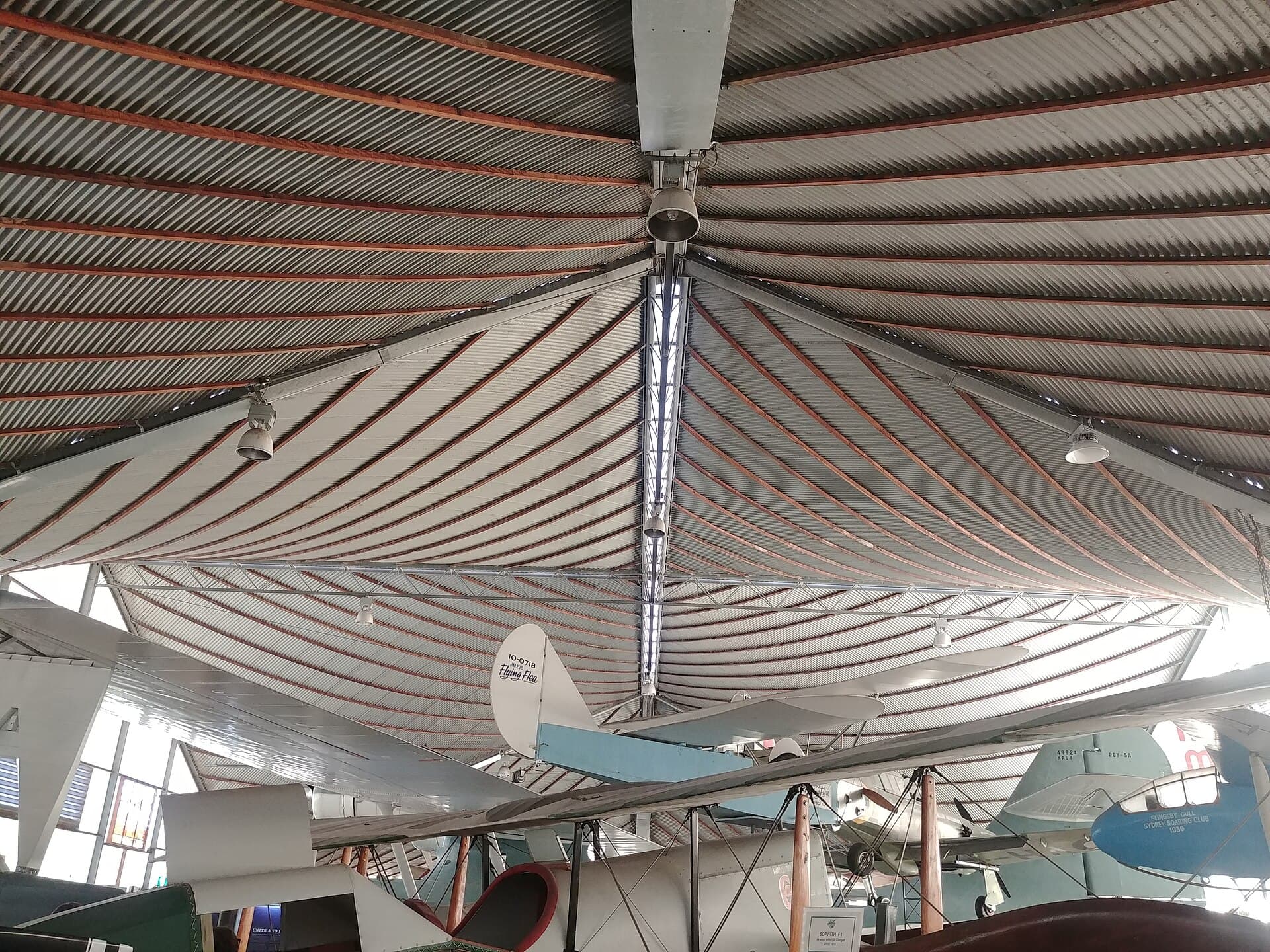
Photo: Sam Wilson. Timber and iron roof structure. CC BY-SA 2.0. Source on Wikimedia Commons. Licence. Full credits on the image credits page.

A timber pest inspection is a hunt with a torch, a mallet and a set of rules about what must not be smashed. In Newcastle that hunt is mostly conducted in the places buyers do not go at an open home: the roof void above a hallway manhole, the crawl space under a weatherboard cottage, the junction where a garden has been built up against a wall. The kitchen island is irrelevant. The bearer is not.
This essay is about what the inspector is actually doing. For the animals and the climate, start with termite risk in the Hunter. For the question of whether this job should share an afternoon with a building report, see combined versus separate. The method lives here, in the pest and termite hub.
The standard, not the folklore
A serious pre-purchase timber pest inspection in New South Wales is written to AS 4349.3. The standard is about inspecting for timber pests — termites, borers, and related conditions such as fungal decay where they bear on the timber — in reasonably accessible areas of a residential building and, typically, the site immediately around it.
It is a visual inspection, plus sounding and probing where that can be done without turning the house into a demolition. It is not a guarantee that every cavity is empty. It is not a treatment proposal, though a finding of live termites will send you toward treating versus monitoring soon enough.
The building inspection, AS 4349.1, is a different walk. A good building report may note conducive conditions. It will not, unless you paid for the pest job as well, be a timber pest inspection. That distinction is the first sentence of what a pre-purchase building inspection covers, and it is still true.
“Reasonably accessible” does the same work here as it does in the building standard. The inspector is not required to cut holes in plaster, move a locked freezer, or crawl a subfloor that cannot be entered safely. They are required to try, and to write down the failure in language you can find at night.
Sounding, looking, and the other senses
Most of the job is eyes and ears.
Visual cues. Shelter tubes on piers and walls. Mudding along a bearer. Distorted paint. Rippled skirtings. Timber that has lost its arris. Kick-out holes. Discarded wings on a sill. A carton nest in a tree. Staining that might be moisture and might be the edge of a gallery. The inspector is pattern-matching against a career of Hunter houses, not against a brochure.
Soundings. A mallet or the handle of a screwdriver, tapped along architraves, skirtings, window reveals, exposed bearers, roofing timbers. Sound timber rings. Worked timber thuds, or sounds papery, or feels like it has a cavity behind the paint. Sounding is not theatre. It is how you find the gallery that has not yet broken the surface. It is also how you annoy a vendor who is standing in the hallway hoping you will hurry.
Probing. Where timber is already suspect, a probe tests whether the surface is a skin over dust. Done with some manners, because the house is not yet yours. Done firmly enough that a hollow sash is not recorded as “paint defect”.
Smell and climate. A subfloor that smells of wet soil after rain is a pest fact in this city. So is a roof void that feels like a greenhouse. Moisture meters help when they are used as instruments, not as a light show. They do not diagnose a species.
Mudding, frass, and the wish to name everything at a glance
Mudding — the soil-and-saliva plaster termites use to build shelter tubes and to pack workings — is the classic subterranean sign. Fresh mudding is moist, often darker, sometimes still being added to. Old mudding is dry, cracked, abandoned-looking. Distinguishing those states is part of the job. Calling every dirty smear on a pier “termite mud” is not.
Subterranean termites travel hidden. The tube on the outside of a brick pier is the part they could not keep inside the timber or the wall. The rest of the journey may be in the soil, in a cavity, or in a bearer you have not sounded yet.
Frass is droppings, usually of borers rather than subterranean termites. It presents as pellets or powder, in a window sash, on a sill, in a pile beneath a flight hole. Colour and shape help an experienced inspector tell a lyctid (powderpost) story from an anobiid story. Frass is not termite mud. Mixing the words in a report is a sign the writer is not paying attention.
Live termites, when found, are the least ambiguous exhibit. Soldiers can be identified to genus if the inspector knows what they are looking at. Coptotermes and Nasutitermes are not interchangeable labels to make the PDF look scientific. If the insects cannot be identified, the report should say that, and still record that they were alive.
Borers versus termites
Buyers in this city use “white ants” as a synonym for every hole in timber. That is unhelpful.
Termites are social insects. Subterranean species forage from a nest, work timber from the inside, and often leave a paint film or a veneer of sound wood as camouflage. Damage can be structural before it is obvious from the hallway.
Borers are beetles. The adult flies. The larva chews. The evidence is flight holes, frass, and timber that may be structurally sound or may be ruined depending on species, timber, and how long the furniture beetle or powderpost beetle has been at it. Some borer damage in old pine floors is historic and inactive. Some is not. An inspector who writes “borer” without saying whether they think it is active is handing you a word, not a finding.
Fungal decay sits in the same inspection because wet timber is the overlapping condition. Rot is not a termite. It is often the reason termites found the timber interesting, and it is often the reason a bearer has no strength left even if the insects have moved on. Subfloor ventilation and moisture is the local climate version of that overlap.
Roof voids, subfloors, landscaping
The hunt has geography.
Roof void. Many Hunter cottages have a manhole in a cupboard. Some have none that can be used without moving a water heater. Some are so packed with insulation that the ceiling joists vanish and walking is a way to put a foot through a bedroom ceiling. The inspector should enter if it is safe, sound the accessible framing, look for mudding, workings, and the scars of old repairs, and say what they could not reach. A glance from the hatch is a glance from the hatch. It should be billed as such in the wording, not as a full void inspection.
Subfloor. This is where weatherboard cottages in Hamilton, Cooks Hill, Waratah and the older lake towns give up their secrets — or refuse to. Three hundred millimetres of damp soil, original vents half buried, a bathroom waste sweating onto a stump. If the inspector can crawl, they should crawl. If they cannot, the report should say so in the body, not in a limitation you will miss. Coastal jobs from Stockton to Redhead add salt air to the moisture; that is a corrosion essay as well as a pest one.
Interior and exterior timber. Skirtings, architraves, reveals, eaves, fascias, deck framing, pergolas, fences where they bear on the dwelling, door jambs, window sills. Sounding as they go. Not every scuff. Every hollow.
Landscaping and the site. Trees with carton nests. Stumps. Timber in contact with soil. Garden beds over ant caps. Firewood against the wall. Sleepers. A shed slab that bridges a termite barrier. The inspection that stops at the back step has not finished. Foraging range does not respect the living-room rug.
What cannot be seen
Tools, and the cavities they still cannot open
The honest part of the job is the list of absences.
Inside wall cavities, unless there is an opening that already exists. Under slabs, without invasive drilling that you have not commissioned. Behind fully packed wardrobes. In a roof void that cannot be entered. In a subfloor with no crawl depth. Under fixed floor coverings. In a locked granny flat. Inside a tree trunk. On the neighbour’s side of a party wall.
Tools do not abolish those limits. A torch, a ladder, a sounding mallet, a probe, a moisture meter, binoculars for eaves, sometimes a camera on a pole — these extend the eyes. Thermal cameras and movement detectors can hint at a temperature patch or a stream of insects in a void. They can also flatter the operator. They are not X-rays, and they are not a reason to skip the crawl.
If you want cavities opened, you are commissioning invasive inspection, with the vendor’s written consent and a plan for repair. That is a different fee and a different mood. The limitations essay is the companion reading before you are angry at a standard inspection for obeying the standard.
A pre-purchase building report has the same humility about access. The difference is that timber pests use the inaccessibility as cover. A cracked brick announces itself. A gallery in a stud does not.
How the findings get written
A competent timber pest report will separate:
- live activity
- workings without live insects
- borer evidence, active or historic
- fungal decay relevant to the timber
- conducive conditions
- areas not inspected, with reasons
If those categories are mashed into “fair, with maintenance”, you have not been given a pest report. You have been given a tone.
Further investigation should be specific: invasive inspection of this wall, a plumber to the shower, a treatment technician to this finding, an arborist to that nest if the tree is the likely source. “Monitor” is a maintenance plan, not a diagnosis. Monitoring after a find is a decision you make with your eyes open; it is not the inspector’s way of avoiding a sentence.
Then you do the after the inspection work. Walk away if the unseen parts plus the seen damage are more house than you want. Stay if you are prepared to own the conducive conditions, which is the subject of living with a fair report. The housing types around you are in the Hunter housing hub. The insects will be in the timber regardless of how the essay is catalogued.
A note on this journal
We do not inspect houses. We do not sell meters. The point of this page is to make the hunt visible enough that you can tell, when the PDF arrives, whether someone actually went into the roof.
Questions readers ask
- Will the inspector drill the walls?
- Not on a standard visual timber pest inspection. Invasive work is a different job, done with permission, because it damages the building. Unseen cavities should be listed as unseen, not guessed.
- Are borers the same problem as termites?
- No. Borers are beetles. Their frass, flight holes and the timber they prefer are different from termite workings. Both can be in the same house. They are not treated as if they were the same animal.
- If the roof void cannot be entered, is the inspection invalid?
- It is limited. A competent report will say so in plain language. Whether you proceed is a purchase decision, not a technicality to be buried in an appendix.
Keep reading
Subfloor ventilation and moisture in coastal Newcastle
From Stockton to Redhead the crawl space stays wet — blocked vents, plastic on soil, bathrooms leaking into the dark, and why lake suburbs and rising-damp language keep getting in the way of a clear diagnosis.
Tom Reilly · 5 September 2024 · 10 min read · Photo: DaHuzyBru, CC BY-SA 4.0
Treating versus monitoring after a termite find
Live termites in a Newcastle purchase are a decision, not a weekend DIY job — chemical barriers and baiting in general terms, structural repairs, vendor obligations, and the case for walking away.
Tom Reilly · 27 June 2024 · 11 min read · Photo: Michael Gardner, Public domain
Combined building and pest versus separate reports
AS 4349.1 and AS 4349.3 are different jobs. In Newcastle they are often sold as one afternoon — what you gain in convenience, what you lose in attention, and when a specialist timber pest inspection is worth commissioning on its own.
Tom Reilly · 28 March 2024 · 10 min read · Photo: One Salient Oversight, Public domain