When to walk away from a Newcastle purchase
The cases where a Newcastle purchase should end after the report — safety, structural doubt, unpriceable pest work, a hollow inspection, and the heat of an auction.
By Sophie Brennan, Consumer editor · 21 August 2024 · Updated 16 January 2026 · 10 min read
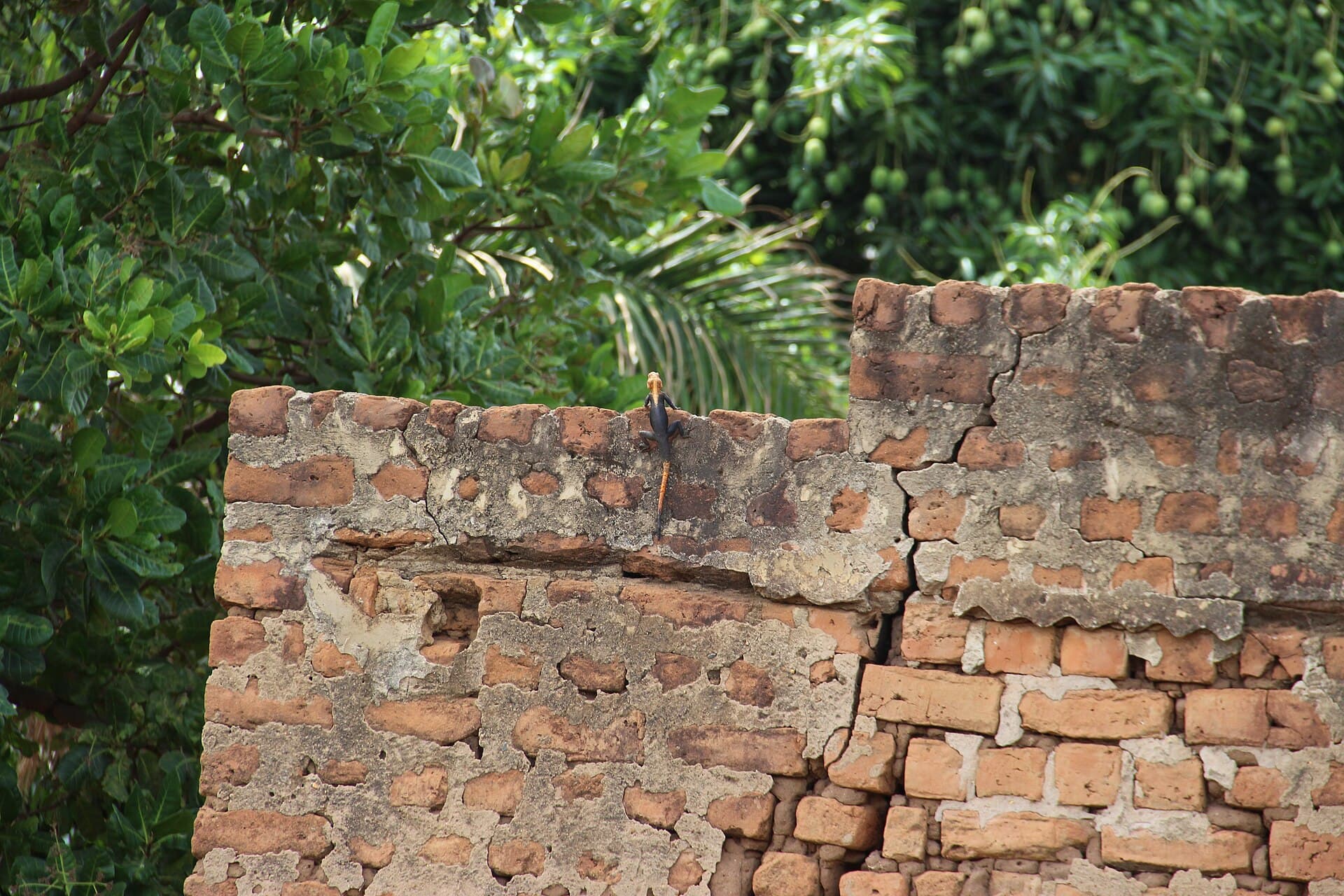
Photo: Kabang Bladina Gideon. Cracked masonry wall. CC BY-SA 4.0. Source on Wikimedia Commons. Licence. Full credits on the image credits page.

There is a moment, usually late on a weeknight, when a buyer in this city decides that leaving a house is a kind of weakness. The open home was lovely. The agent has been warm. Friends have already been sent the listing. The report, sitting in the downloads folder, is trying to say something unkind and is being ignored for that reason.
Walking away is what the inspection is for. Not the only outcome — a fair report is often an invitation to own something — but a legitimate one. This essay is about the cases where staying is the sentimental choice and leaving is the adult one. It belongs in after the inspection, next to renegotiation and sequencing repairs. If you are still learning what the document can say, start with what a pre-purchase inspection covers and the rest of the pre-purchase hub.
We are not talking about a sticky sash. We are talking about safety, about structure you cannot yet understand, about pest activity you cannot price, about a report so limited it is an empty folder, and about the particular heat of a Newcastle auction.
Safety you cannot live with
A safety hazard in a report is not a negotiation style. It is a statement that the inspector believes someone could be hurt.
Typical items in this city: a deck that has parted from the wall, a balustrade that would not stop a child, electrical work that looks unlicensed and unfinished, a gas heater that should not still be in the room, asbestos sheeting smashed in a yard, a stair with no useful handrail. Any one of these can be repaired. The question is not whether a trade exists. The question is whether you can make the house safe before you occupy it, with money and time you actually have.
If the answer is no — the deck is the only back entrance, the electrical is throughout, the occupancy is next week because you have already given notice — you are not buying a renovation. You are buying a period in which the hazard is yours. That is a reason to stop.
Do not let an agent reword a safety item as “something to look at after you move in”. Read the sentence. Call the inspector if it is ambiguous. A good inspector would rather explain a balustrade than hear that you slept under it. The reports and standards hub is there for the limits of the document; it is not there to shrink a hazard into a minor.
Safety is also the one category where “the market is hot” is an irrelevant sentence. Other buyers may be willing to occupy the hazard. That does not make it smaller.
Structural uncertainty
Houses move. Hunter houses move for ordinary reasons — clay, age, a tree, a wet year — and for local ones. Mine subsidence is a real subject in the coalfields, not a story you tell at dinner. A stepped crack can be a maintenance item or the visible edge of something you should not price from a photograph.
Walk away when the report’s structural story is incomplete in a way you cannot finish in time:
- further investigation by a structural engineer, and you cannot get one onto the site before you must decide
- movement that shows in several places at once — jammed windows, a raking lintel, a floor that falls, a crack that is a sentence rather than a word — and no one has tied those observations together
- roof framing that has been cut about, with no safe access to see how much
- a later addition whose junction with the old house is doing something the inspector can smell but not quantify
Uncertainty is not the same as a known expensive roof. A known roof you can quote and renegotiate, or accept and sequence. Uncertainty is a bet that the next professional will say “not too bad” because you would like them to. Sometimes they will say that. Sometimes they will say you have bought a wall.
If the inspector has used “monitor” as a refrain, that is not automatically a dodge, and it is not automatically calm. How to read the report is the companion. If every serious line is a monitor and the limitations are long, you do not have a house you understand. You have a hope. Hopes are a poor reason to exchange.
Coastal steel and connections have their own uncertainty; corrosion from Stockton to Redhead will not always announce itself as a dramatic crack. New houses can look finished and still be structurally and hydrologically unfinished. New builds versus established is that psychology. None of those essays tell you to be afraid of old brick. They tell you not to buy a question you cannot stay to hear answered.
Pest activity you cannot price
Termites in the Hunter are not a rumour and not a reason to flee every weatherboard. They are a reason to have a timber pest inspection to AS 4349.3, and to treat what it says as a cost or as a stop.
If you never bought a real pest inspection, what a timber pest inspection looks at is the job you still owe yourself. Treating versus monitoring is a later decision, and only after someone has actually seen the timber.
Walk away when the pest file is a hole in the budget:
- active subterranean termites, and the inspector cannot tell you — because no one could, from a visual job — how far the gallery has run through framing you cannot see
- damage to structural members that will not be understood until linings come off
- a house so conducive (timber in soil, no vents, chronic wet) that treatment without rebuilding the conditions is a subscription, not a repair
- a building report that “mentioned pests” and no real AS 4349.3 inspection at all, with no time left to get one
Coptotermes acinaciformis does not care about your cooling-off period. Termite risk in the Hunter is the natural history. The point here is narrower: if you cannot write a number that would still be true after the carpenter opens the wall, you are not negotiating. You are guessing. Guessing is how people spend their first year of ownership on a house they would not have bid on.
A clean pest report with conducive conditions is a maintenance brief, not a walk-away. Do not confuse the two. Do not, either, let a vendor’s “we’ve never seen any” stand in for a licensed inspection. They may be telling the truth as they know it. The timber is not required to have copied them in.
A report so limited it is hollow
“Reasonably accessible” is the phrase that does the most work in AS 4349.1. An inspector will not cut holes or crawl a void that cannot be entered safely. They will say when they could not. Buyers skip that page because it is not a photograph of a kitchen.
Walk away when the unseen parts are the parts that matter and no one will open them:
- no roof-void access, or a void so packed with insulation or stored life that the inspector stood at the hatch
- a subfloor that exists and could not be entered — common under older weatherboard and brick in Hamilton, Cooks Hill, Waratah and the lake towns. Subfloor moisture is not a problem you price from the hallway.
- rooms locked, stacked, or refused by a tenant, including the wet areas
- a later dwelling or studio that was advertised and not inspected
A hollow report is not a small courtesy issue. It is a discounted document at a full price. Timing the inspection is how you try to prevent this. If the vendor will empty the house and you still have time for a second visit, take it. If the vendor will not, or the auction is Saturday, you are being asked to buy on the rooms that photograph well.
Limitations and exclusions are not fine print for lawyers only. They are the edge of what was seen. Strata adds another kind of hollowness — common property you cannot send a builder into on your own timetable. That is a separate essay, and sometimes a separate reason to stop.
Do not fill a hollow report with a thermal camera and call it complete. Meters and cameras are tools inside an inspection, not a substitute for entering the void.
Emotional pressure at auction
The Saturday you already decided
Newcastle auctions have a particular weather. A weatherboard in Cooks Hill, a brick in The Hill, a lake house that will not come up again “in this price range”. The crowd, the agent’s patter, the fear that wanting something reasonably is the same as being left behind. People who have read a difficult report still bid because leaving feels like a public failure.
It is not. The failure is buying a house whose majors you had already decided you could not carry, because a stranger’s paddle went up.
The discipline is boring and it works:
- inspect early, on purpose, as the auction strategy piece describes
- read the report as a document, not as a vibe
- decide, in writing, the last number you will bid including the work you will have to do
- decide the conditions under which you will not bid at all — safety, unpriceable pests, a hollow report, an engineer you could not get
- on the day, obey that piece of paper
There is no cooling-off of the ordinary kind after a residential auction in this state. You cannot take the PDF home as a second chance. Renegotiation is a private-treaty craft. At auction the craft is leaving while you can still be seen doing it.
If the agent is applying pressure in the days before — other parties, a vendor who “won’t consider” a building report, a suggestion that inspecting is a lack of faith — that is information about the process, not about the house. You can still inspect. You can still not bid. Choosing a licensed inspector is not an insult to the listing.
What walking away looks like
Private treaty and auction
On a private treaty, you talk to the conveyancer about the contract you signed. There is, on a typical residential purchase, a short cooling-off. Ending it is a procedure, not a mood, and it usually has a prescribed cost. Do not ghost the agent and call that legal advice. Do not, either, stay in a purchase because you are embarrassed about the fee.
At auction, walking away looks like not bidding, or stopping when your number is gone. It looks ordinary from the street. It feels worse than it is.
After you have left, the report is still useful. It has taught you what you will not swallow next time. It may have taught you that you want a pre-sale inspection culture on the next listing — a vendor who already knows the roof. It should not teach you that every old Hunter house is a trap. Most of them are houses. Hunter housing will still be there when this listing has gone.
If you leave because the report was hollow, make the next booking earlier and nastier about access. If you leave because of pests, do not “save money” on the next pest inspection. If you leave because of a feeling in a crowd, write the number down sooner.
What is not a reason to walk
A pile of minors on a lived-in house. A roof that is ageing and quoted. A kitchen you do not like. A colour. A neighbour’s tree that is a council conversation. Mine subsidence mentioned on a property that has a file and a calm engineer. Termite conditions without activity, if you will actually maintain the vents. These are ownership. Treating them as walk-away criteria is how people chase a new build that is only wet in a different way.
The inspector is not your parent, and the report is not a permission slip. It is also not an insurance policy; what a report cannot do is the companion if you are hoping a disclaimer will save a bad purchase. You can buy a difficult house on purpose. The journal’s interest is that you do it on purpose — with the majors priced, the limitations read, and the auction already decided in a quieter room.
A note on this journal
We do not have a house to sell you and we do not earn a fee when you stay or go. The point of this page is to give leaving its proper name. The keys are not a prize. They are an acceptance of whatever the building has been doing while you were looking at the tap. If you cannot accept it, the open home is over. There will be another street.
Questions readers ask
- Is walking away the same as failing the inspection?
- No. An AS 4349.1 report does not pass or fail a house. You decide whether the risk, the cost and the uncertainty are ones you will own. Leaving is sometimes that decision.
- What if I have already paid a deposit?
- On a typical private-treaty cooling-off you may have a statutory way to end the contract, usually with a small prescribed penalty. At auction, the deposit is not a rehearsal. Speak to your conveyancer about the document you actually signed.
- Can a bad access report be fixed by a second visit?
- Sometimes, if the vendor will empty the rooms and the timetable still lets you read the result. If they will not, you are being asked to buy a guess. That is a reason to leave.
Keep reading

Living with a fair report — maintenance calendars
A fair report is a maintenance brief. Gutters, vents, wet areas, paint and pest inspections after settlement, set to the Hunter year.
Helen Cartwright · 15 October 2024 · 11 min read · Photo: Procsilas Moscas, CC BY 2.0
Pre-sale inspections for Hunter vendors
Why Hunter vendors commission an inspection before listing, what is worth fixing, and how a pre-sale report changes the conversation without hiding the house.
Helen Cartwright · 26 September 2024 · 10 min read · Photo: David Baron, CC BY-SA 2.0
From report to repair — sequencing an older house
Water, structure, pests, then paint — the order of work on an older Hunter house, and how to live in it while the trades come through.
Sophie Brennan · 31 July 2024 · 11 min read · Photo: Sam Hood / State Library of New South Wales, Public domain