Pre-sale inspections for Hunter vendors
Why Hunter vendors commission an inspection before listing, what is worth fixing, and how a pre-sale report changes the conversation without hiding the house.
By Helen Cartwright, Editor · 26 September 2024 · Updated 4 March 2026 · 10 min read
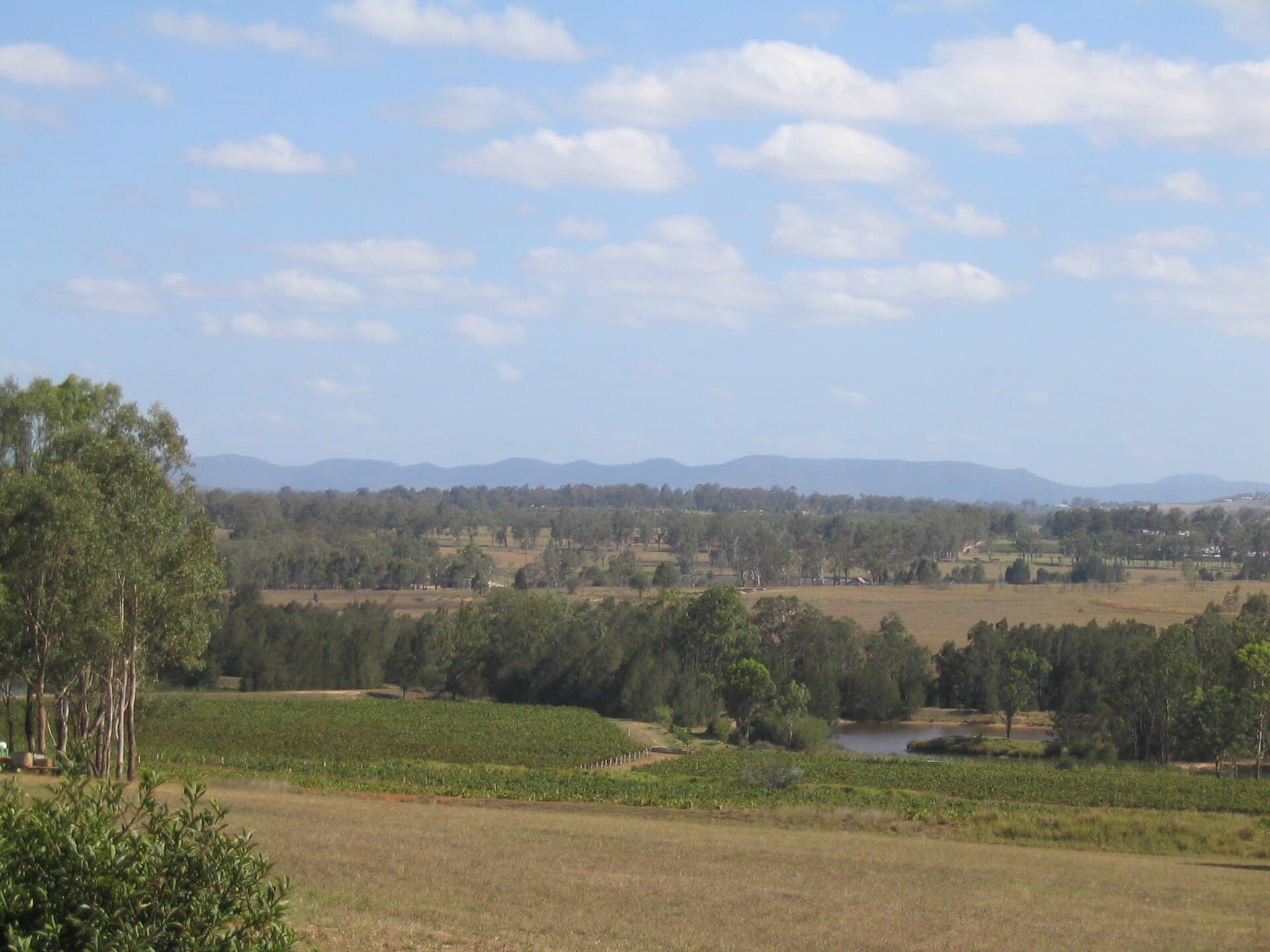
Photo: David Baron. Hunter Valley landscape. CC BY-SA 2.0. Source on Wikimedia Commons. Licence. Full credits on the image credits page.

Most vendor advice in a rising street is a kind of theatre: style the kitchen, mow the nature strip, hide the dog’s evidence, hope. It treats the buyer’s inspector as an ambush that happens to other people. In Newcastle and the Hunter the ambush is ordinary. The stock is old enough to have a past, the market is still capable of hurrying someone from open home to exchange, and the first independent document many owners meet is a PDF written for a stranger.
A pre-sale inspection is the decision to hear that document first. It is not a magic certificate. It will not make a tired roof young. It will tell you, while you still own the timetable, what a licensed person will say when they are paid to be unsentimental. This is a vendor’s essay. It lives in after the inspection because the useful work happens after the report, not after the photographer. Buyers still start at pre-purchase.
We do not sell inspections. We do not write your listing copy. The point is to stop you meeting your own house in someone else’s cooling-off period.
Why inspect before you list
You already know the kitchen tap. You do not necessarily know the rear hip, the subfloor vent behind the gardenia, or the junction between the 1950s brick and the pavilion someone called a studio. A standard pre-purchase inspection is a visual walk of reasonably accessible areas, usually to AS 4349.1. Commissioned by you, it has three advantages that a buyer’s report will never give you.
You choose the day. Empty the garage. Move the stacked boxes in the spare room. Unlock the manhole. Lift the dog bed off the wet-area door. Access is not a courtesy; it is the difference between a report and a hollow file. A vendor who inspects while the house is still their workshop can make the house inspectable.
You choose what to do with the news. A major on a buyer’s report arrives as a demand, a threat, or a silence that ends in a withdrawn offer. The same major on your report arrives as a works list, a pricing decision, or a sentence you will say out loud in the kitchen when the agent wants to know why the board has been quiet.
You are not in love with the listing. Buyers have to decide whether to want the house. You have to decide whether the house, as it stands, is the one you intend to sell. Those are different nerves. Use yours while they are still useful.
If you also want timber pests — and in the Hunter you should — that is AS 4349.3, not a glance at a fence post. Coptotermes acinaciformis does not wait for a campaign. The pest hub, what the pest inspection looks at, and termite risk are the longer reading. A building report that “keeps an eye out” is not a pest report.
Licensing still matters when you are paying the invoice. Choosing a licensed inspector in NSW is the same discipline as it is for a buyer. You are not looking for a friend. You are looking for someone who will write the sentence a later inspector will write.
What will kill a sale
Not every defect kills a sale. Most older Hunter houses sell with a list. What kills a sale is a surprise that looks like concealment, a hazard no reasonable occupier can ignore, or a cost that cannot be named in the time the buyer has.
Fix, or price honestly, the items that do that work:
Active water. A stain that is still wet, a roof that is past a repair and into a replacement, a shower that has been feeding a wall. Buyers can live with an old roof they have quoted. They walk from a leak they met in week one, or they renegotiate it as a major. You would rather choose the number.
Unsafe structure and access. Decks that have pulled away, balustrades that would not stop a child, stairs, obvious electrical or gas hazards. These will be written as safety items. They read, correctly, as a vendor who asked a stranger to take the risk. Make them safe, or do not list as if they were decoration.
Pest activity. Live termites, or damage that will not be understood until linings come off, will stop a careful buyer and unnerve a hurried one. Treatment and a paper trail are better than a scented candle and a story about “the Hunter”. If the activity cannot be priced, you are in the same position as the buyer in when to walk away — except the house is already yours.
A house that cannot be inspected. Locked rooms, a void that cannot be entered, a tenant who will not allow the wet areas, a studio that is in the brochure and not on the day. The buyer’s report will then be a document of limitations. Limitations are not a technicality. They are how a fair house starts to look like a hidden one.
The junction no one mentioned. Unapproved work, a pavilion, a converted garage. The inspector can only say what they see. The council file will say what was allowed. A buyer’s conveyancer will find the gap if you do not.
Coastal steel from Stockton to Redhead, and movement on the coalfields, are not automatically sale-killers. They are local facts. Read coastal corrosion and mine subsidence so you do not over-repair a crack or under-describe a lintel. Hunter housing stock is the typology — weatherboard, fibro, brick veneer, Federation and interwar — and your report is the instance.
Fix, disclose, or price — do not hide
There are three honest uses of a pre-sale report. There is a fourth that only looks like a use.
The three honest uses
Fix what is cheap relative to the fear it causes, and what you would have to disclose by the state of the building anyway. A failed wet-area membrane you can open properly. A deck connection. Gutters that dump into the eaves. Vents you buried in a garden bed ten years ago. Pest activity. These are jobs, not moods. Sequence them as a buyer should: water, structure, pests, then paint. Painting first is how vendors hide a leak from themselves.
Disclose what you will not fix. An ageing roof you have priced. A crack an engineer has seen and written about. A limitation you could not resolve. Disclosure is not a speech at the open home. It is a conversation with the agent and the solicitor about what goes in writing, and a refusal to describe the house as something the report says it is not. We are not your lawyers. We are telling you that a styled photograph is not a representation you want to lean on.
Price the rest. A house with a known tired roof and a known price is a cleaner sale than a house with a “character” roof and a buyer who discovers it on day four. You do not need to discount a feeling. You need a number that already contains the majors.
Do not hide. Do not fill a vent because it “looks neater”. Do not silicone a wet area the report has already called. Do not stack the void the week the photographer comes. Do not treat a fresh exterior as a membrane over soft timber. Buyers’ inspectors are paid to notice those things, and Australian consumer law is not sentimental about conduct that misleads. Even if no one ever sues anyone, the later report will read as a house that was prepared against inspection rather than for sale. That reading kills trust faster than a cracked pane.
A pile of minors — paint, a sash, a laundry tub — is almost never worth a skip. It is the cost of a house that has been used. Buyers who nickel-and-dime those items are telling you something about themselves. You do not have to pre-empt them with a renovation.
How a pre-sale report changes the conversation
Used honestly, the document does a quiet job.
The agent can speak to work that has been done, and to work that has been priced, instead of performing surprise when a buyer’s PDF arrives. They still work for you. They cannot usefully work from a fantasy.
The buyer should still commission their own inspection. Say that, if you say anything. Your report is dated. It was written for you. Access may have changed. A buyer who relies on your file alone is being casual with their own money; the pre-purchase pieces exist to tell them so. What you have done is remove the sense that the first true sentence about the house was written by their inspector as an attack.
The negotiation, if it comes, starts from overlapping facts rather than from a mood. “Your report says the roof is at the end of its life; ours said that in September; here is the quote we obtained; here is how that sat in the asking price.” That is a conversation. “How dare they” is not.
The campaign can avoid the particular stupidity of advertising a house as turnkey when the void says otherwise. Turnkey is a word that belongs on a new build, and even then new builds can be wet. An older Hunter house is sold as an older Hunter house. People who want that will pay for it. People who want a showroom were never your buyers.
Strata and townhouses change who can fix what. A pre-sale inspection that cannot see common property is a limited tool; that essay is the buyer’s version, and the logic is the same. You cannot promise a roof you do not solely own.
What the report will not do for you
It will not pass the house. There is no pass. How to read AS 4349.1 is worth your time as a vendor; the vocabulary of major, minor and safety will be the vocabulary of the later conversation. It will not insure anyone against the next winter; what a report cannot do is the blunt version.
It will not replace a pest inspection, a survey, an asbestos register, a pool certificate, or the council file. The reports and standards hub is the list of what paper is which.
It will not make a hollow house full. If you cannot get into the subfloor, the buyer’s inspector will not perform a miracle. Either open it or accept that both reports will say they did not.
It will not, by itself, be a marketing asset. Some vendors put the report on the table at the open home. That can be clean. It can also be a way of drowning a major in forty pages. If you share it, share it as a document you have read, with the majors in your mouth, not as a prop.
Meters and cameras will not save a bad envelope. Thermal imaging can help an inspector look. It cannot certify a membrane you did not install.
After you have sold it
If you have used the report to make the house honestly saleable, you have done the work. The buyer who remains will still find things — they always do, once furniture moves — and a fair report they then live with is their essay. Yours ends at settlement.
If you are still deciding whether to sell at all, the same document is a maintenance brief. That is a respectable outcome. Plenty of Hunter owners inspect, read, and stay. The journal is not in a hurry for the board to go up.
A note on this journal
We do not rank agents and we do not write scope of works. The point of this page is to put the first inspection in the hands of the person who can still change the house. The photographer will make it look like a Sunday. The later inspector will not. You may as well meet them in order.
Questions readers ask
- Does a vendor’s report replace the buyer’s inspection?
- No. A serious buyer should still commission their own AS 4349.1 report, often with a timber pest inspection. Your document is older, written for you, and may have seen different access.
- Should I fix everything the pre-sale report mentions?
- Fix what will stop a sale or make a report look worse than the house — active leaks, unsafe work, pest activity, blocked access. A pile of minors is usually priced in living, not in a skip.
- Is it dishonest not to volunteer the report?
- Hiding a defect you have papered over is a different act from declining to publish a file. Do not conceal. Do not pretend a fresh coat is a membrane. Speak to your agent and your solicitor about what you will disclose.
Keep reading

Living with a fair report — maintenance calendars
A fair report is a maintenance brief. Gutters, vents, wet areas, paint and pest inspections after settlement, set to the Hunter year.
Helen Cartwright · 15 October 2024 · 11 min read · Photo: Procsilas Moscas, CC BY 2.0
When to walk away from a Newcastle purchase
The cases where a Newcastle purchase should end after the report — safety, structural doubt, unpriceable pest work, a hollow inspection, and the heat of an auction.
Sophie Brennan · 21 August 2024 · 10 min read · Photo: Kabang Bladina Gideon, CC BY-SA 4.0
From report to repair — sequencing an older house
Water, structure, pests, then paint — the order of work on an older Hunter house, and how to live in it while the trades come through.
Sophie Brennan · 31 July 2024 · 11 min read · Photo: Sam Hood / State Library of New South Wales, Public domain