From report to repair — sequencing an older house
Water, structure, pests, then paint — the order of work on an older Hunter house, and how to live in it while the trades come through.
By Sophie Brennan, Consumer editor · 31 July 2024 · Updated 14 December 2025 · 11 min read
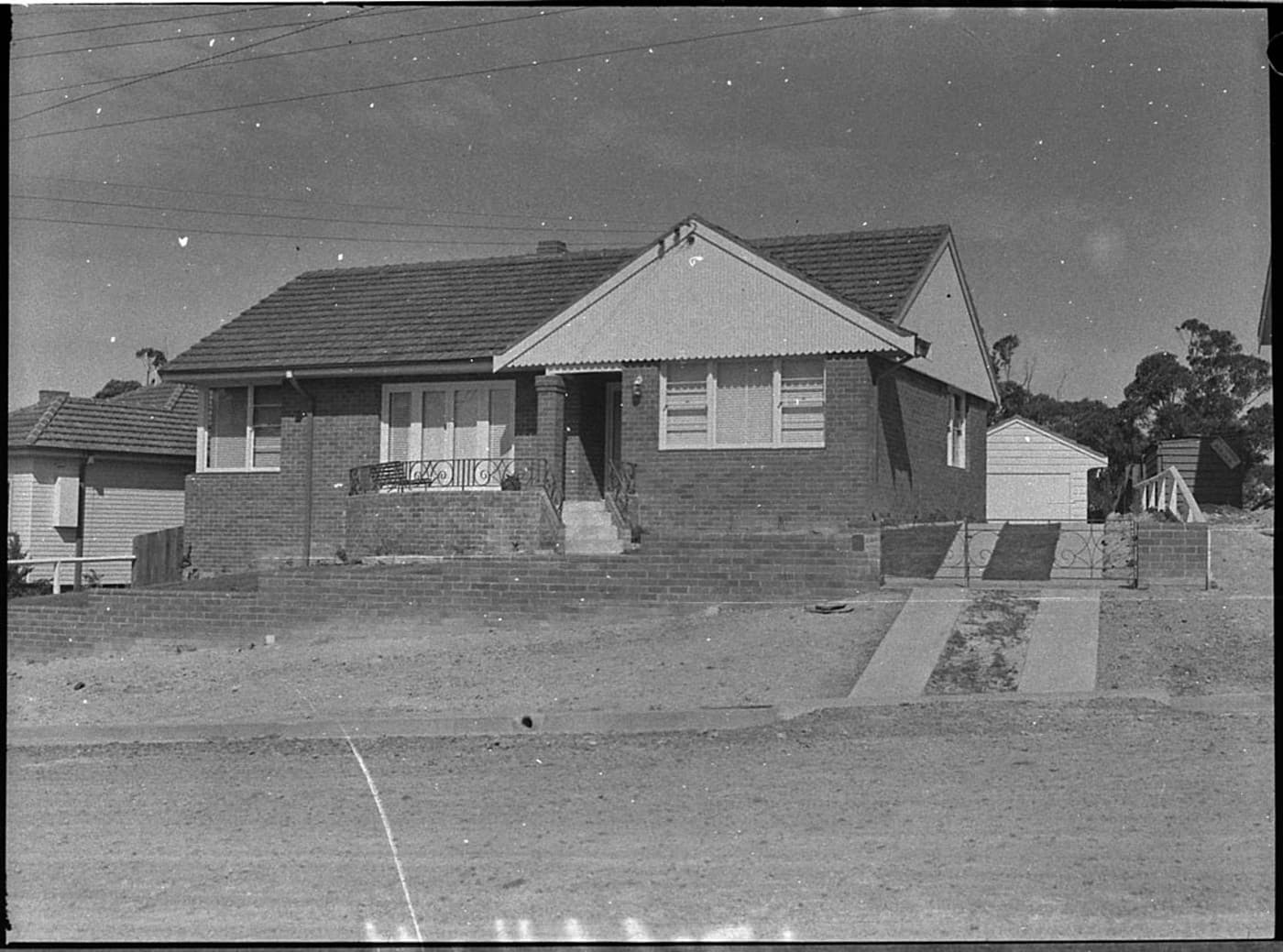
Photo: Sam Hood / State Library of New South Wales. House, Charlestown–Highfields. Public domain. Source on Wikimedia Commons. Licence. Full credits on the image credits page.

Settlement is a legal event. The house does not know it happened. The leak in the rear hip, the vent buried in the garden bed, the shower that has been quietly feeding the wall since the last renovation — they continue. What changes is who owns the problem.
A fair AS 4349.1 report on an older Hunter house is not a demolition order. It is a sequence, if you are willing to read it that way. Buyers who skip the sequence — kitchen first, roof later, pests when someone mentions them at a barbecue — spend the same money twice. This essay is the order of work. It sits next to using the report to renegotiate and living with a fair report in the after the inspection hub.
The stock this applies to is the ordinary older house of the region: weatherboard in the inner suburbs, mid-century brick veneer in Charlestown and the lake towns, fibro that has already outlived several owners, a Federation or interwar house with a pavilion tacked on in a hurry. Hunter housing is the typology. The report is the particular file.
Water first
Water is the defect that recruits the others. It rots timber, lifts paint, feeds termites, rusts connectors, and turns a “monitor” crack into a movement problem. If the report has an active leak, a roof at the end of its life, gutters that dump into the eaves, or a wet area that has failed, that is the first job. Not the second. Not the one you do after you have “made it liveable”.
On a Hunter house the water story is rarely a single hole. It is a system:
Roof. Terracotta that has lost its pointing, corrugated iron that has lost its laps, flashings that were never dressed into a later addition. You do not have to replace a roof because a report called it ageing. You do have to stop water where the inspector saw staining, soft timber, or daylight.
Gutters and downpipes. A blocked box gutter in a February storm will put a ceiling on the floor faster than a missing ridge cap. Leaves from jacaranda, liquidambar and eucalypt are not a lifestyle detail. They are a maintenance item with a season. Clear, fall, and discharge away from the footings. The maintenance calendar is the longer version of this paragraph.
Flashings and junctions. The expensive leaks in this city are often at the join between the old house and the new room — the granny flat, the “studio”, the pavilion that does not appear in the council file. A torch in the roof void is more useful here than a mood about character.
Wet areas. A leaking shower in a 1980s veneer in Charlestown is a different creature from rising damp on a Civic terrace, but both write themselves into timber if you ignore them. Silicone is not a membrane. If the inspector has called the wet area, get a waterproofing specialist or a licensed plumber who will open it, not a tiler who will recaulk and invoice.
The ground. Garden beds against weatherboard, paving that falls toward the wall, a subfloor that smells like a wet dog. Water that cannot leave will find the stumps. Subfloor ventilation and moisture is the longer diagnosis; coastal jobs add salt to the same logic — see coastal corrosion.
Do the water work before you strip interiors. There is no point hanging new plaster in a room whose eaves still hold last week’s rain.
Then structure
Once the house is drying — or at least no longer being filled — look at what is holding it up.
Piers and stumps. Rotated, subsided, missing packing. A bouncing floor in an older weatherboard is often this, not “the house settling” as a personality trait. A carpenter or a restumping crew belongs here, not a floor sander.
Masonry and lintels. Stepped cracks, rusted steel over openings, brickwork that has lost its bond. A single hairline is not a project. A crack that runs through a wall and shows in the reveal of a jammed window might be. In the coalfields you keep mine subsidence in mind as a reason to look twice, not as a party trick. If the report says further investigation by a structural engineer, that call happens before you book a brickie to “tidy the crack”.
Roof framing. Members cut about for a skylight, a storage platform built on ceiling joists, connections that have rusted in a salt wind. The roofer who is already there for the covering should not leave without saying what the timber is doing. If they cannot, you need someone who can.
Decks, stairs, balustrades. These are structure and safety at once. A deck that has pulled away from the wall is not a staining job. It is a rebuild or a proper reconnection, and you do not let children on it in the meantime.
Structure after water, not because water is more important in the abstract, but because you cannot honestly read movement in a wall that is still wet. Moisture meters and cameras can help and can flatter; that essay is the caution.
If the report’s structural items were hidden behind poor access — no void, no subfloor, a garage full of the last owner’s life — you do not sequence a guess. You open the house and, if necessary, re-inspect the parts that were hollow. Paying for a second look after settlement is cheaper than decorating a problem.
Then pests
Timber pests are not a subplot you get to after the painter. In the Hunter they are part of the building. Coptotermes acinaciformis will use the same moisture you have just sworn to fix. If the timber pest inspection found activity, damage, or conditions that make activity likely, that work belongs here — after the leak is stopped, before you close walls and certainly before you spend money on timber floors you care about.
Sequence inside the pest job:
- treat or manage activity as the licensed pest technician specifies
- remove or isolate the conducive conditions the report already named: timber in soil, blocked vents, leaky wet areas, firewood against the cladding
- only then repair or replace damaged members, knowing what you are nailing new timber to
A building report that “mentioned termites” in passing is not a pest report. Combined versus separate is blunt about that, and what a timber pest inspection looks at is the job you still need. If you bought the house on a building report alone, commission that inspection now, before the cosmetic budget is spent. Termite risk in the Hunter is the local natural history; treating versus monitoring is the decision once something has been found. Neither is a reason to wait until you see wings on a windowsill.
Do not spray, paint, or “treat it yourself” as a way of skipping a technician. You will hide evidence and you will not know whether you have done anything.
Then cosmetics
Paint, kitchens, floors, the bathroom you actually like — this is the work the open home prepared you to want. It comes last because it is the work water, movement and insects will destroy if they are still in the building.
There is a respectable version of doing something visible early: making one room clean enough to sleep in, replacing a dangerous stove, putting a lock on a door that has never had one. That is occupation, not a renovation. A full kitchen while the box gutter still feeds the ceiling is a renovation performed in the wrong decade.
When you do reach cosmetics, the report’s minors become a list rather than an insult. The sticky sash can be eased. The skirting can be replaced after the wall has dried. The exterior paint can be treated as a membrane, which on weatherboard and on coastal steel it partly is, not as a mood. Living with a fair report is the calendar for the years after the skip has gone.
Trades in order
The order of people follows the order of problems.
A useful default
On an older Hunter house it looks like this:
- Electrician and gas fitter, if the report or your own walk found safety items. You cannot sequence a house you should not be standing in.
- Roofer and plumber — covering, gutters, flashings, stormwater, the wet area that is actually leaking. Same week if you can stand the noise; same month if you cannot.
- Structural engineer, if the report asked for one, before the carpenter or bricklayer quotes a crack they have not understood.
- Pest technician, once the obvious water is stopped and they can see what they are treating.
- Carpenter, restumper, bricklayer — the members and openings the engineer or the report named.
- Waterproofing and wet-area trades, when you are ready to open a bathroom properly, not as a silicone afternoon.
- Plaster, floors, joinery, paint. The painter is last for a reason. They will otherwise paint the evidence, and they will be back.
Licensing is not a vibe. Choosing who is allowed to do the work is a different page, but the same discipline applies to the people you ring after settlement. The reports and standards hub is the paper trail for what was said about the house; keep the report in the job folder so a trade is arguing with a document, not with your memory of an open home.
Strata complicates the order because some of the water and some of the structure will not be yours to sequence. Read strata and townhouse inspections before you book a roofer for a building you do not solely own.
Living in the house while it is repaired
Most people who buy an older house in this city intend to sleep in it. That is possible. It is not comfortable if you pretend it is a television montage.
Occupation, not a montage
One wet area at a time. A house with two bathrooms can lose one. A house with one bathroom needs a week of planning, a neighbour, or a short stay elsewhere. Do not open the only shower on the weekend a low is forecast.
Dust and access. Restumping and roof work will fill the house with the last century. Seal doors you are living behind. Accept that the “clean” room will not stay clean. If you have a tenant, the work is their home as well as your project; that is a legal and a human fact, not a scheduling footnote.
Safety while occupying. Temporary balustrades, covers on openings, no children on a deck that is being rebuilt. The report named hazards because they were hazards. Settlement did not retire them.
The calendar versus the mood. You will want the house to look finished before a visitor comes. Visitors are not the sequence. Dry, safe, treated, then pretty. If that takes a year on a Charlestown mid-century with a tired roof and a later addition, that is a year, not a failure.
When to leave for a bit. A re-roof in summer heat, a fumigation or extensive termite work, a wet-area demolition that opens the laundry into the kitchen — these are the weeks you spend somewhere else if you can. Budget that as part of the job, the way you budget skip bin and scaffolding.
Hunter weather as a constraint
The Hunter does not care about your builder’s start date. East-coast lows, a humid summer, a dry stretch that ends in a night of rain, salt wind on the coast, clay that moves after a wet autumn — the weather is a party to the sequence.
- Do not strip a roof because a roofer had a cancellation in a week of unstable weather. Temporary covering is a plan, not a hope.
- External paint on weatherboard wants a dry window, not a motivational Saturday. Coastal steel wants more frequent attention than an inland brick veneer; housing stock and corrosion will tell you which house you bought.
- Subfloor work in a bog is how people decide the crawl space is “fine actually”. Wait for the ground to be a crawl, not a swim, then go in.
- Stormwater and gutters should be right before the season that tests them, not after the ceiling has already recorded the result.
None of this changes the order: water, structure, pests, cosmetics. It changes which month you attempt each step. The maintenance calendar is what you keep once the sequence is finished and the house is only a house again.
What the report is for, after you own it
The report does not expire at settlement, and it is not a warranty that begins there. It is a snapshot. Use it as the first draft of a works list. Cross off what you have done. Add what you find when furniture leaves and the garage is empty. If a limitation said the void was unseen, go and see it. The pre-purchase pieces are still the map of what that first walk was allowed to claim.
If you are still in the purchase and the sequence looks longer than your money or your nerve, that is information. Walking away is sometimes cheaper than a year of trades in the wrong order. Renegotiating is how you might fund the right order. Vendors who already know the sequence — because they commissioned a pre-sale inspection and used it — are easier to deal with than vendors who are meeting the house for the first time in your PDF.
A note on this journal
We do not send trades and we do not price your roof. The point of this page is to stop the most expensive habit in an old Hunter house: decorating a leak. The house will tell you, in timber and in plaster, whether you listened. The report already tried to.
Questions readers ask
- Should I renovate the kitchen before I fix the roof?
- No. Water that is still getting in will undo joinery, floors and paint. Make the envelope dry, then deal with structure and pests, then spend money you can see.
- Can I live in the house while the work is done?
- Often, if you sequence wet areas one at a time and keep safety items off the floor. A re-roof or a termite treatment may mean a short stay elsewhere. Plan that before the skip arrives.
- Does Hunter weather change the order of trades?
- It changes the calendar more than the order. Water still comes first, but you do not strip a roof ahead of an east-coast low, and you do not paint weatherboard in a week of salt wind and rain.
Keep reading

Living with a fair report — maintenance calendars
A fair report is a maintenance brief. Gutters, vents, wet areas, paint and pest inspections after settlement, set to the Hunter year.
Helen Cartwright · 15 October 2024 · 11 min read · Photo: Procsilas Moscas, CC BY 2.0

Pre-sale inspections for Hunter vendors
Why Hunter vendors commission an inspection before listing, what is worth fixing, and how a pre-sale report changes the conversation without hiding the house.
Helen Cartwright · 26 September 2024 · 10 min read · Photo: David Baron, CC BY-SA 2.0
When to walk away from a Newcastle purchase
The cases where a Newcastle purchase should end after the report — safety, structural doubt, unpriceable pest work, a hollow inspection, and the heat of an auction.
Sophie Brennan · 21 August 2024 · 10 min read · Photo: Kabang Bladina Gideon, CC BY-SA 4.0