Mine subsidence and the Hunter coalfields buyer
What a walk-through can show, what a Subsidence Advisory NSW document is for, and how to look at cracks in Cessnock, Maitland, Kurri Kurri and older Newcastle without inventing a mine under every hallway.
By Priya Nair, Housing stock editor · 5 March 2024 · Updated 22 February 2026 · 12 min read
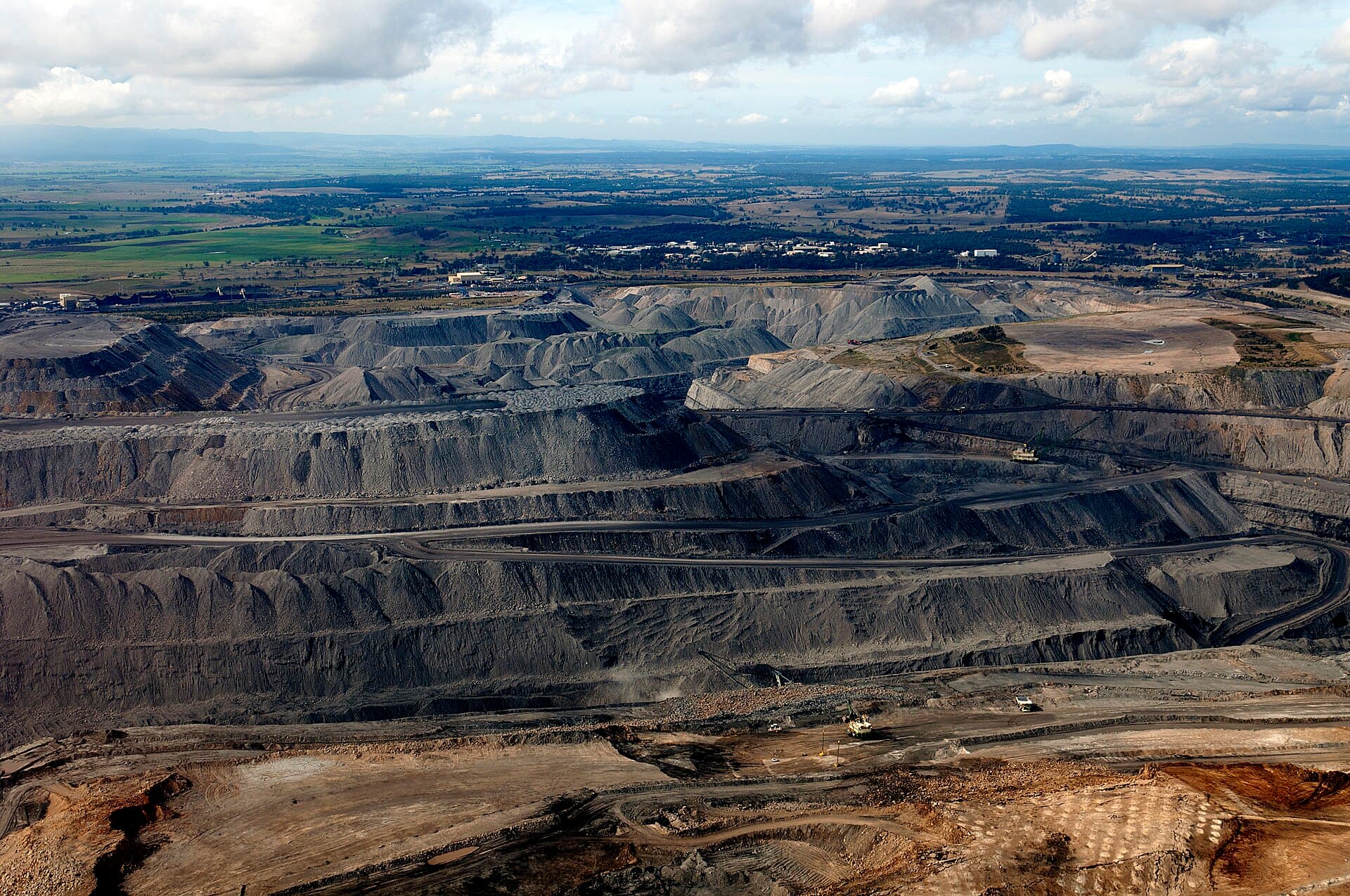
Photo: Max Phillips. Open-cut coal mine, Hunter Valley. CC BY 2.0. Source on Wikimedia Commons. Licence. Full credits on the image credits page.

The Hunter was mined before it was suburban. That is not a metaphor. Coal workings sit under towns that now sell as lifestyle, and the legal machinery that grew up around that fact — once widely known as the Mine Subsidence Board, now Subsidence Advisory NSW — is part of buying a house here whether the listing mentions it or not.
This essay is a careful one. It is not legal advice, it is not a claim about your lot, and it will not invent entitlements, time limits, or compensation stories. If you want the inspection as a visual job, start with what a pre-purchase building inspection covers in NSW. If you want the paperwork that is not the inspector’s, see building codes, council records and the inspection. The houses sit in Hunter housing stock. The documents sit with your conveyancer and the public agency that issues them.
A field, not a rumour
Newcastle’s coalfield is old in Australian terms. The workings and their descendants run, in a general way, through the city side and out along the towns that coal built: Maitland, Cessnock, Kurri Kurri, and the smaller places that still have a pit in the civic memory even when the pit is a lake or a paddock. Open-cut operations in the Upper Hunter are the photograph people recognise. The buyer’s problem is often older and closer — underground extraction, long finished, under a street of brick veneer or a weatherboard that has been painted for the third time this century.
You do not need a seam map to buy carefully. You need to know that mine subsidence districts have existed in this region for a long time, that development inside them has been regulated, and that the name on the letterhead has changed. Subsidence Advisory NSW is the present public face of that system. What a particular certificate will say about a particular address is a question for that system and for the solicitor or conveyancer who knows how to ask it. It is not a question this page will answer by suburb folklore.
Surface mining and underground mining do not write the same signature on a house. A journal that pretended otherwise would be guessing. What they share, for a buyer, is the need to separate three things that get mashed together at open homes: the history of the field, the status of the lot in the current administrative system, and the cracks in the plaster.
What the certificate is for
People use “the mine subsidence certificate” as a single object. In practice you are dealing with information about whether a property sits in a district, and with whatever document your conveyancer tells you is the one that matters for this contract. The forms and the brand names have changed over the years. This essay will not recite a clause as if it were still printed that way.
In general terms, a district search or agency document is about administrative status and recorded information. It is not a building inspection. It will not tell you that the hallway is level. It will not tell you that the rear wall was rebuilt in 1994 with or without approval. It will not guarantee that the ground will not move again. Ground moves for reasons that have nothing to do with coal — clay, trees, leaking pipes, a badly compacted fill.
Treat the document as one input. Treat the AS 4349.1 report as another. Treat an engineer, if you need one, as a third. If someone at the auction tells you “it’s fine, it’s got the certificate”, they have collapsed a file into a vibe. Your conveyancer’s job is to keep those objects separate. Ours is to say that they were never the same object.
We will not tell you that a certificate “covers you”, “doesn’t cover you”, or “should have been disclosed”. Those are legal sentences. They belong to the person you are paying to say them.
What the inspector can actually see
A building inspector in Cessnock or East Maitland is looking at a house, not a mine plan. They can see:
- cracks in masonry, render and plaster — their width, their pattern, whether they are stepped, tapered, or hairline
- doors and windows that bind, or that have been planed to fit a moving opening
- floors that are out of level in a way you can feel
- brickwork that has been stitched, tied, or rebuilt
- additions that have parted from the original at the junction
- a fence or path that has dropped relative to the house
They cannot see the workings. They cannot date a crack to a particular extraction. They cannot tell you, from a Saturday walk, whether a movement is finished. They can say that a crack looks like ordinary settlement, or that it looks like something an engineer should review, or that they could not get a good look because the vendor’s furniture is doing a job.
In the Hunter that “look twice” habit is rational. It is not a party trick. Stepped cracks in a brick-veneer estate at the edge of a coalfields town deserve the same attention as stepped cracks in an inner-Newcastle terrace — and they deserve the same humility. Brick veneer of the 1970s to 1990s cracks because slabs curl, because cavities are bridged, because a lintel has rusted. Weatherboard cottages go out of level because stumps rot. Fibro cottages crack a sheet when a door slams. Federation and interwar brick grows and shrinks with moisture in the old clay. None of those sentences require a pit.
What the inspector should do, if they are any good, is describe the evidence and resist the romance of a single cause. “Further investigation — structural engineer” is a serious line when it is tied to a wall. It is padding when it is tied to every hairline in the estate.
Cracks that might be ordinary settlement
Most cracks in Hunter houses are boring. That is good news, and it is hard to hear when you have just been told the word subsidence.
Hairline cracks at cornices, at the junction of a plasterboard wall and a ceiling, at the corner of a window in a 1980s veneer, are often the house drying, or a slab edge doing what slab edges do, or a previous owner’s cheap renovation letting go. They still belong in the report if they are real. They are not a geology lesson.
Stepped cracks in mortar joints are the ones people photograph. They can mean differential settlement. They can mean a lintel that has lost its bearing. They can mean a tree, a leaking downpipe, or a trench that was backfilled with optimism. They can, in this region, mean ground movement associated with old workings. The crack does not announce which. Pattern, location, whether it continues through a plinth, whether it is fresh or painted in, whether the other side of the house is doing the same thing — those are the inspector’s notes. Your engineer, if you hire one, gets to be more certain, and even then will often speak in likelihoods.
Tapered cracks, wider at the top or the bottom, are a story about rotation. Again: many authors. A coastal house can rotate a balcony because steel has gone. A coalfields house can rotate a corner because the ground has. Do not let the suburb choose the cause before the building has been looked at.
Jammed windows and catchy doors are useful because they are a performance test. A house that has moved enough to pinch a sash has moved enough to talk about. A house that has one sticky bedroom door after rain may have a moisture problem, which on a timber floor is as likely to be subfloor damp as anything under the seam.
Brick growth — the slow expansion of clay masonry — produces cracks that get blamed on mines because they look dramatic on a gable. They are still worth recording. They are not a diagnosis.
How to hold the two documents in one head
The practical method is unromantic.
Commission the building inspection, and the timber pest inspection, as you would anywhere in the Hunter. Walk the house if you can. Read the limitations first. Then read the cracks as building cracks. Ask the inspector what they would like an engineer to see, if anything. Do not ask them to interpret a mine plan they do not have.
Separately, let the conveyancer obtain whatever district and agency information the contract and the address require. Read that as status, not as a condition report. If the two stories seem to argue — a quiet inspection and a complicated document, or a dramatic inspection and a calm document — that is a reason to slow down, not a reason to pick the story you prefer.
Termites will still eat a coalfields weatherboard. A fibro lining will still be a lining. A wet bathroom in a 1980s veneer will still fail first. Mine history does not cancel the rest of the house. It sits beside it.
If you buy, sequence the repairs from water and safety inward, as you would on any older Hunter place. If the engineer’s letter is the serious letter, it goes near the front of that sequence. Living with a fair report on a coalfields house is mostly the ordinary calendar — gutters, weep holes, a dry edge — plus the humility to keep an eye on a crack you were told to monitor, and the discipline not to monitor a crack you were told to fix.
A note on this journal
We do not sell certificates, and we do not interpret your lot. The point of this page is to stop a word with a long local history from being used as either a scare or a shrug. The ground in the Hunter has a past. The house has a present. The inspector speaks to the present they can reach. The agency document speaks to a system. Keep them in different hands, and do not let an auctioneer braid them into one sentence.
Questions readers ask
- Does a building inspection certify that a house is safe from mine subsidence?
- No. The inspector can describe cracks, levels and movement they can see. A district search or certificate is a different document, obtained through the proper channel, and it is not a structural warranty.
- Are stepped cracks proof of old workings?
- No. Stepped cracks appear in ordinary settlement, reactive clay, leaking plumbing and poor detailing. They are a reason to look twice, not a diagnosis of a seam.
- If the property is in a mine subsidence district, should I walk away?
- Not automatically. Being inside a district is a planning and documentation fact. It is not, by itself, a report that the house has failed. Speak to your conveyancer, and do not take legal comfort from a journal essay.
Keep reading
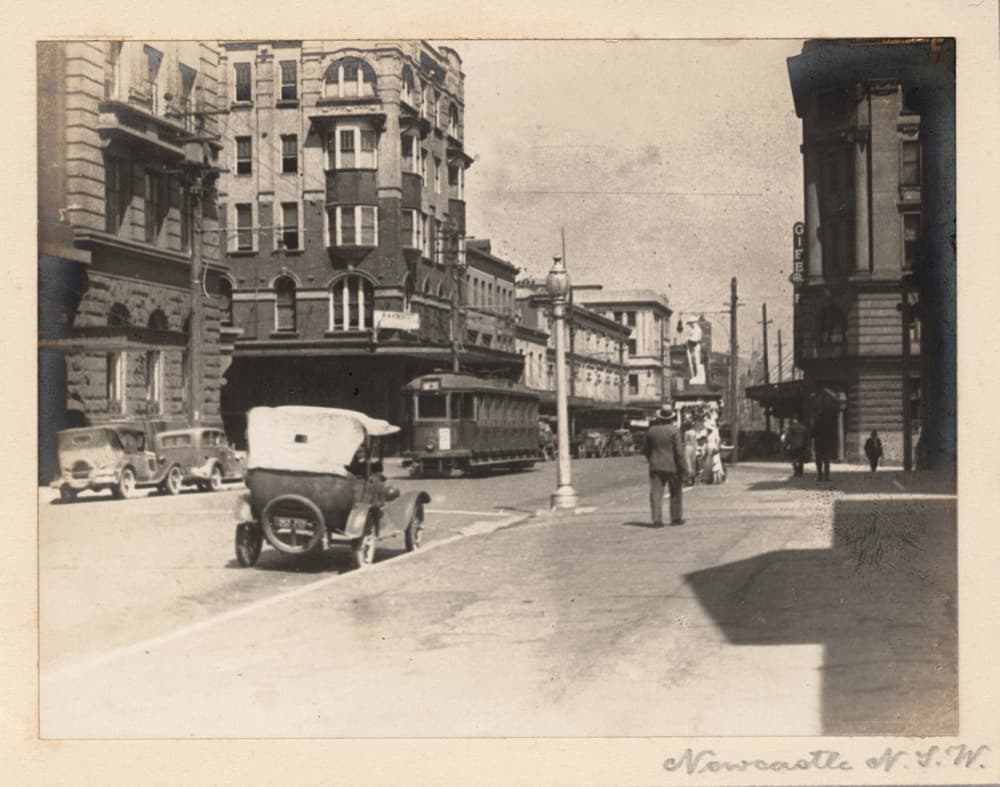
Federation and interwar homes in Newcastle and Maitland
Roofs, leadlights, damp and the later kitchen — how to read Federation houses and Californian bungalows on The Hill, in Cooks Hill and in Maitland without mistaking a renovation for the original house.
Priya Nair · 30 August 2024 · 11 min read · Photo: Royal Australian Historical Society, No known copyright restrictions
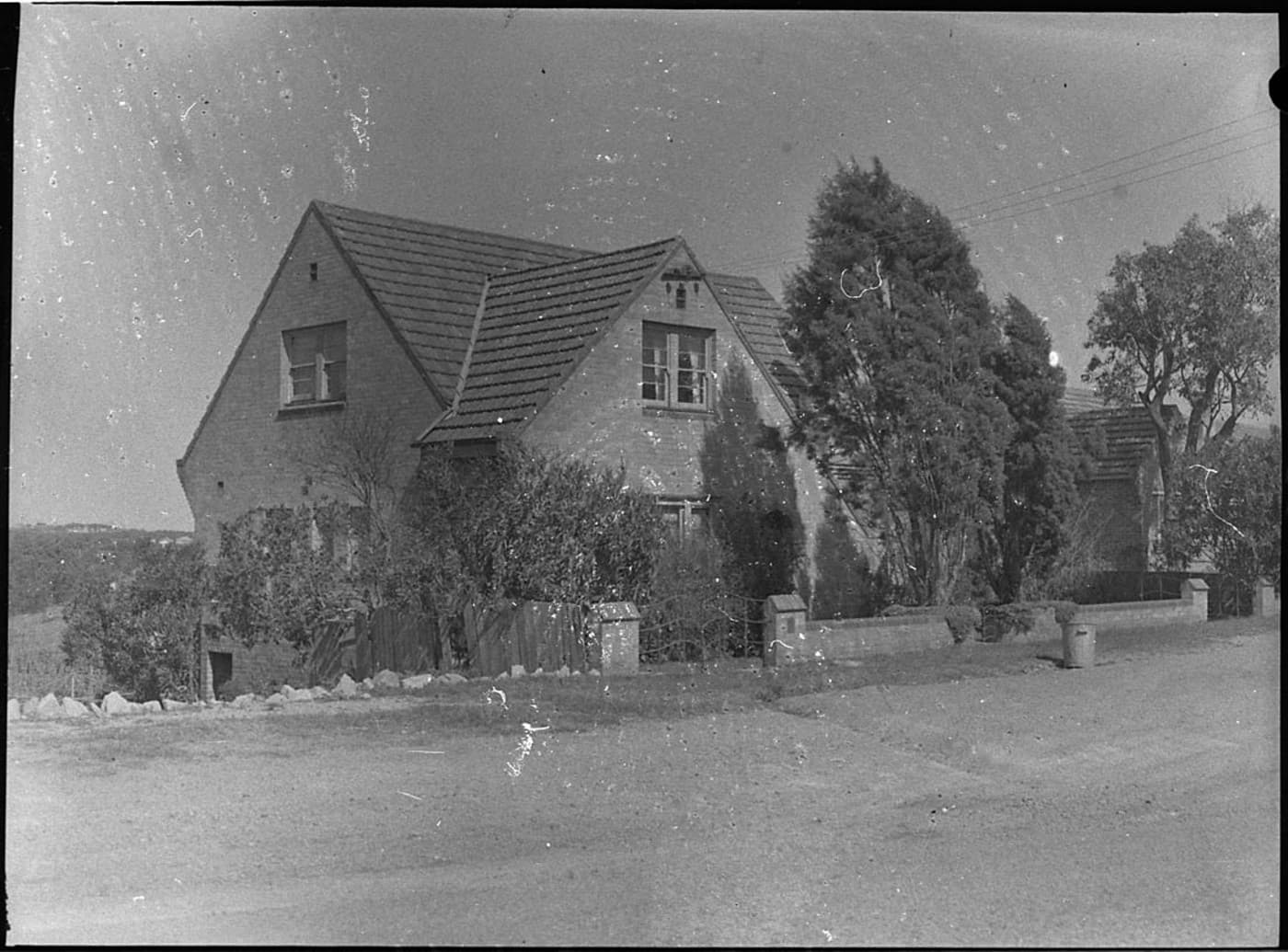
Brick veneer, 1970s to 1990s: what fails first
Weepholes, cavities, wet-area failures and aluminium windows on the Charlestown, Adamstown Heights and Warners Bay estates — the suburban house that looks finished and still leaks in the usual order.
Priya Nair · 22 July 2024 · 10 min read · Photo: Sam Hood / State Library of New South Wales, Public domain
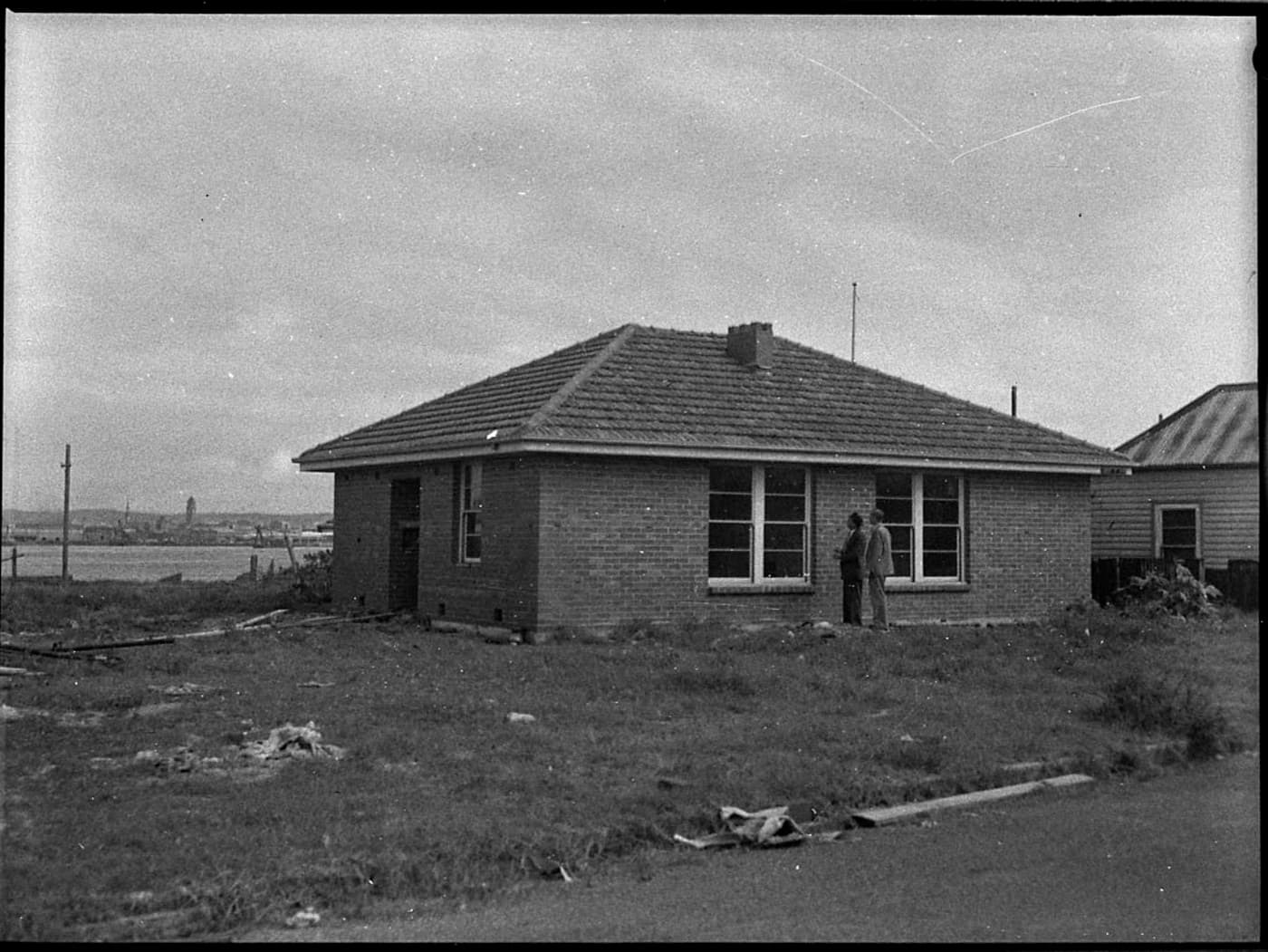
Coastal corrosion from Stockton to Redhead
Salt, steel, roofing screws, lintels and balconies on the Newcastle coast — how to tell corrosion from poor maintenance when the southerly is doing half the inspection.
Priya Nair · 19 April 2024 · 11 min read · Photo: Sam Hood / State Library of New South Wales, Public domain